Reflections
This reflective essay was shared in the Reflections exhibition, showing in the Tin Pot Cafe, North Fitzroy, from 4 December 25 to 30 January 26.
Reflection doesn’t stay still. It is light bending back to the eye, thought turning inward — a world seen twice: once in glint or flicker. Across these works, it moves through different forms: the gleam on water or metal, the quiet act of looking — and being looked at — the way an image meets its double and dissolves. Reflection resists definition, changing with each surface it meets.
My work moves through liminal wild — the shifting edges of perception, memory, and embodied knowing, where the wildness of place is both invitation and threshold. Reflection gathers in the textures and stories carried by tide: seaweed, seagrass, and silent echoes of movement. I keep company with the drama of transition, the places where elements meet and mingle. And I dwell in liquid light, in the shimmer and glow of water, where reflection is both surface and depth, and light kisses earthen waters.
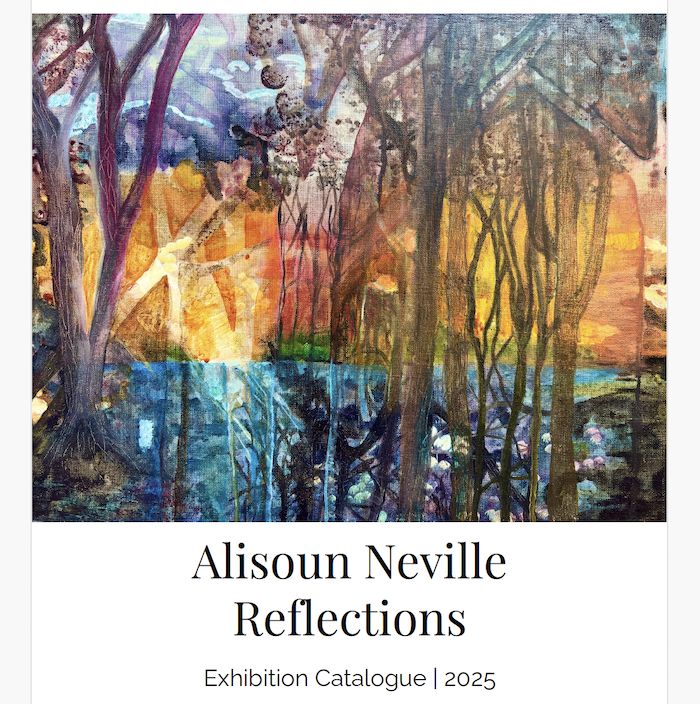
Alisoun Neville Reflections: Exhibition Catalogue 2025.
Every material holds a way of gathering and giving back light. Metals throw it sharp and bright; wood absorbs and softens; canvas gathers it slowly, layer by layer. These differences are integral, as the materials co-create the work. When I print a photograph on wood, the memory of the tree runs beneath the image, its grain echoing through materials of stone and ocean plant. Metal prints shimmer like water, catching and releasing movement in a single breath. Water, glass, and polished surfaces invite us to look, but what we see is always displaced.
Oil and acrylics release light differently, which can seem to stretch time. A paint brush is different from camera, requiring a slower and more gestural reflection of the moment. Reflection is physical, and light writes meaning into matter.
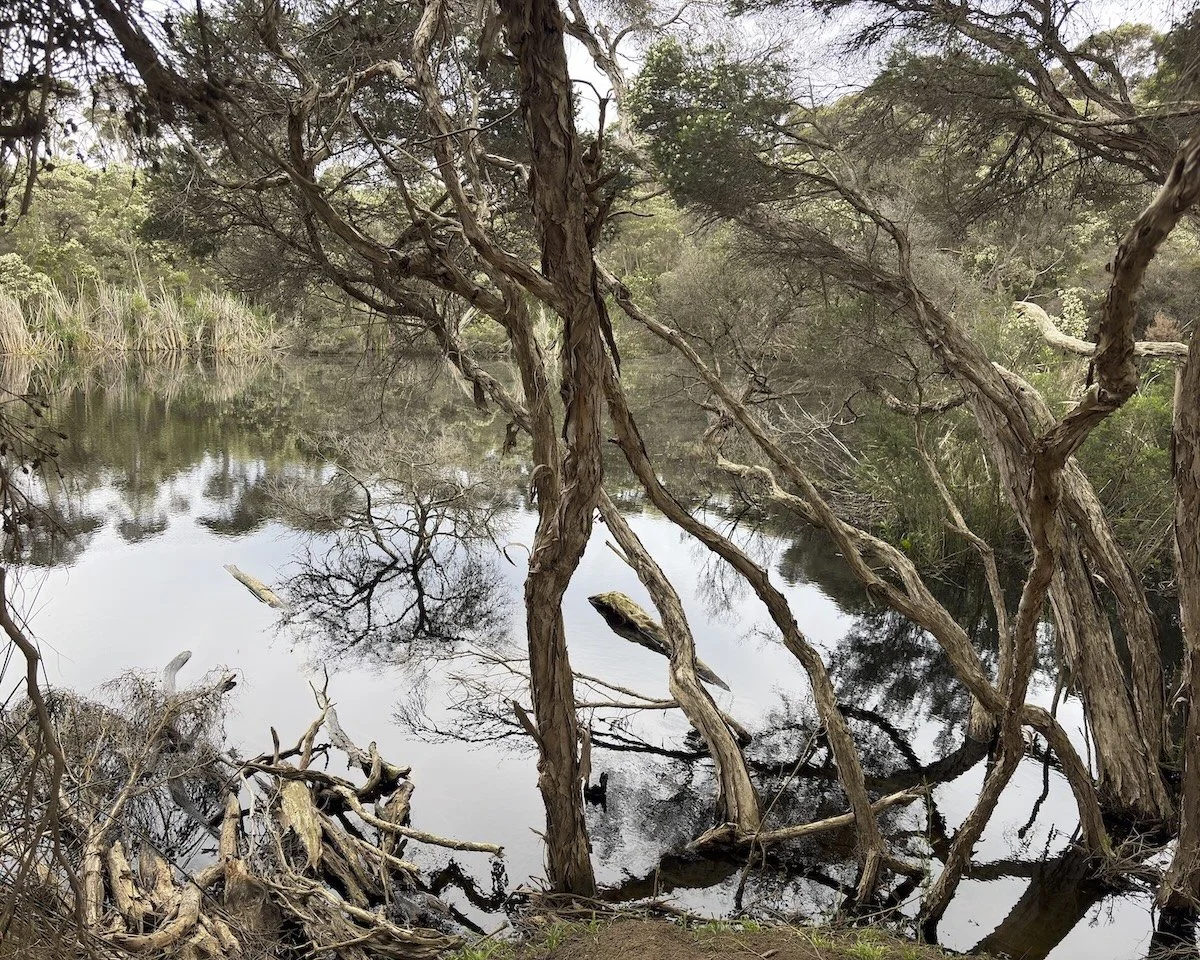
In Mirrorwood, trees nestle with their image, and the edge of real and reflected is dissolved. This moment of uncertainty — as the seen world trembles — refuses to settle into fixed reality.
Mirrorwood. Fine Art Photograph. 2025.
Perception wavers, instability becomes another truth. To see is to encounter distortion, and yet within that, new form appears. Reflection becomes a practice — to live with what shifts.
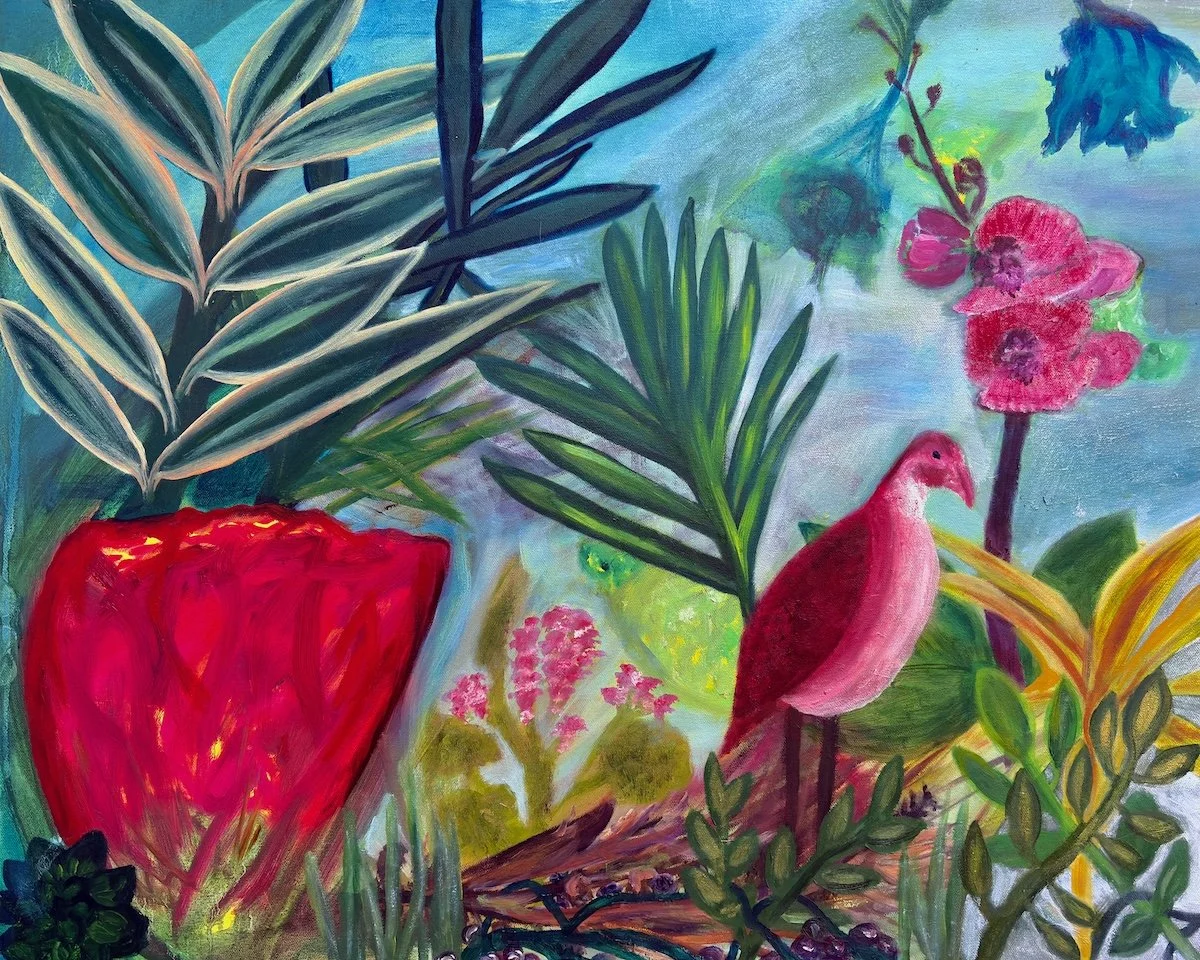
Reflection holds the act of being seen. In Still Bird and Among the Waratahs, the birds are my witnesses — their gaze returns the act of looking, unsettling who holds the power to see. Perception shifts, invites, and unsettles. In Magic Landing, the bird’s arrival is both magical and grounded, an embodied pause in the vivid call from a more-than-human world. Dragon of the Deep swims this threshold between real and unreal — a mythic presence pressing close from an unseen world. Within these encounters, seeing and depicting is entangled with the colonial project — an ethical reckoning as much as a gesture of wonder.
Reflection holds the act of being seen. In Still Bird and Among the Waratahs, the birds are my witnesses — their gaze returns the act of looking, unsettling who holds the power to see. Perception shifts, invites, and unsettles. In Magic Landing, the bird’s arrival is both magical and grounded, an embodied pause in the vivid call from a more-than-human world. Dragon of the Deep swims this threshold between real and unreal — a mythic presence pressing close from an unseen world. Within these encounters, seeing and depicting is entangled with the colonial project — an ethical reckoning as much as a gesture of wonder.
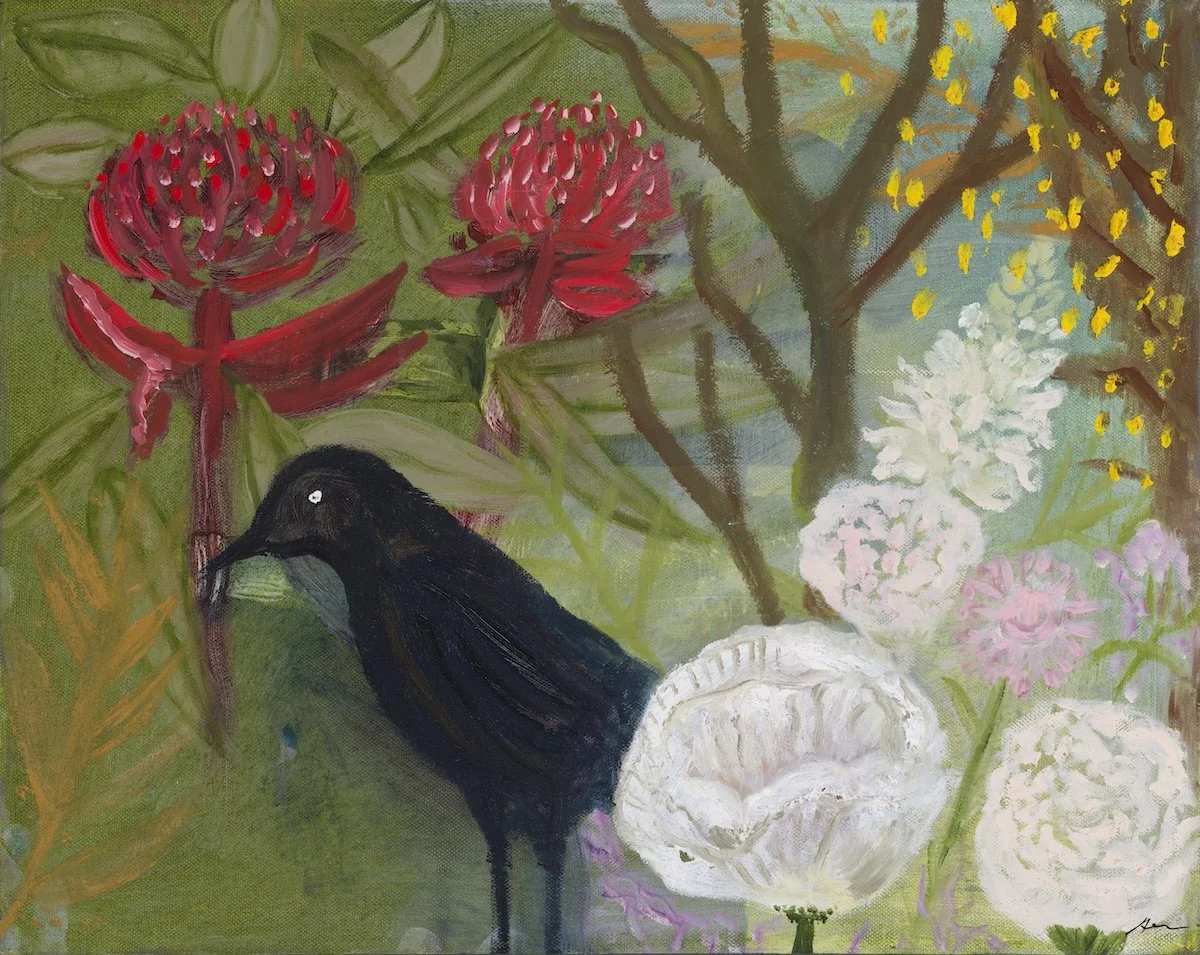
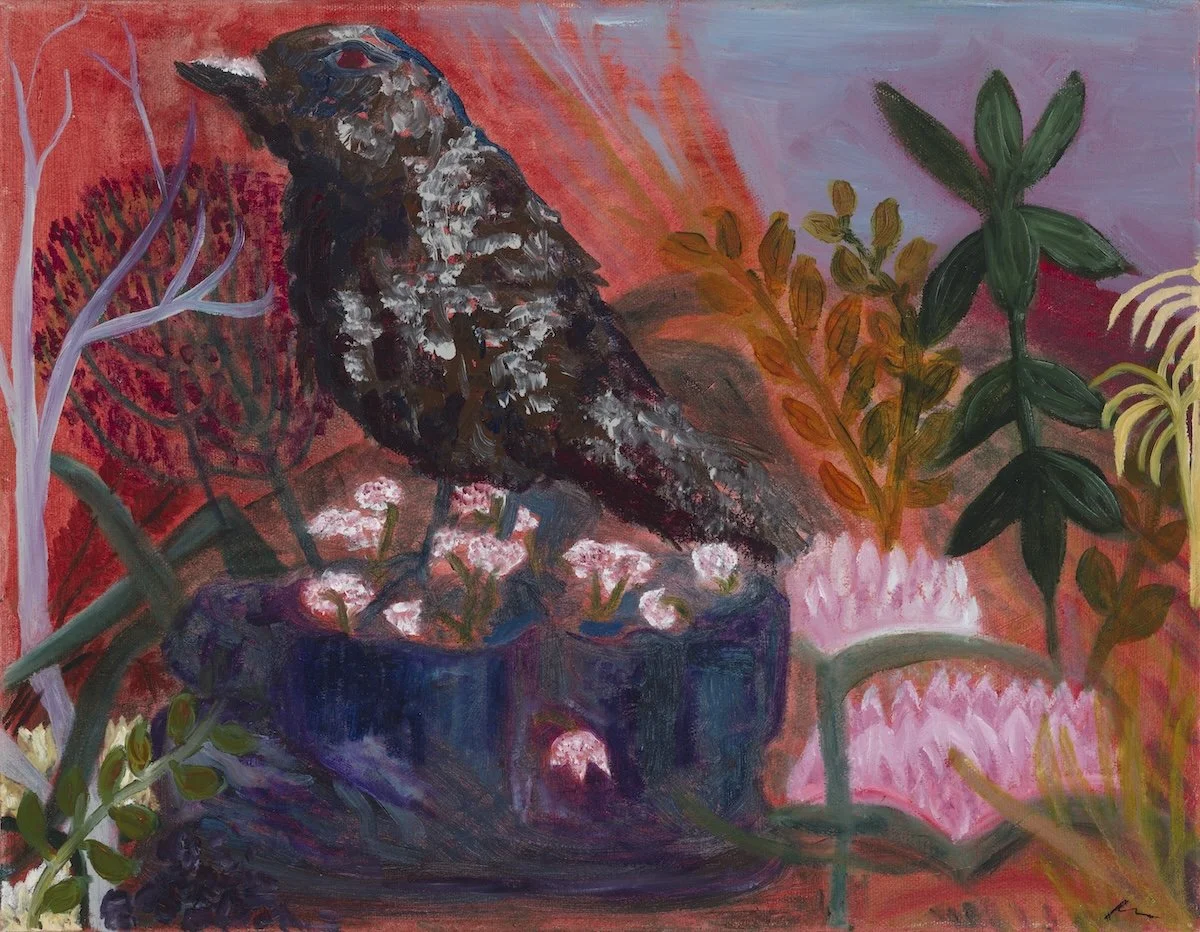
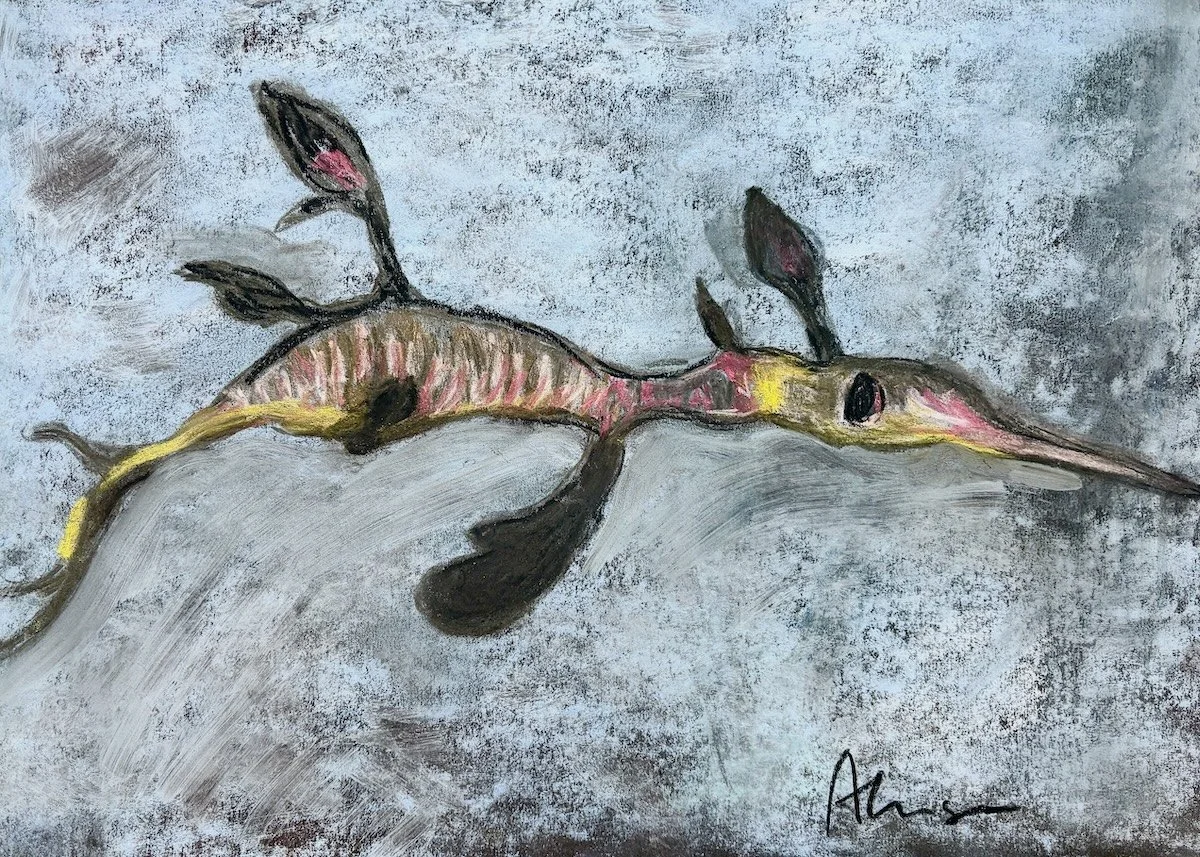
In Magic Beach, Walkerville, reflection expands outward from the self: seeing becomes an ethical gesture, an acknowledgment of what is held within place. The title evokes enchantment in this meeting of land and sea — a reflection of beaches experienced as idyllic and magical, yet holding hidden stories of invasion and resistance. In Inlet, the so-called ‘Boat Creek’ carries stories older than any map — held in the curve of the land, the rich glow of water, and the final stretch to the tide.
In Flame and Tide, the horizon burns and lifts at once, holding the beauty of shadow and its luminous glow. In Dark Bloom, kelp detaches from its rock, carrying the memory of attachment within its release. Reflection is passage — a way through which light and living can remake one another.
After all this turning, I return to the senses — the warmth or cool of sand underfoot, the play of light across water, the quiet of noticing. Speckled Gold, Etched Time, and Dark Bloom dwell in that simplicity — moments of grounded attention where light reveals the ordinary as awe. Lantern Trees invites the viewer to linger, delight in shadows, and dip gently in sensory pleasures.
Reflection moves as light and shadow, emerging and dissolving.