Creative Time - Do art and attention change the way I experience time?
Time stretches with the summer sun.
It collapses, loops, vanishes, or lingers, depending on how I meet it.
Time alters what I notice, what I miss, and what grows through attention. Perception expands and contracts with time.
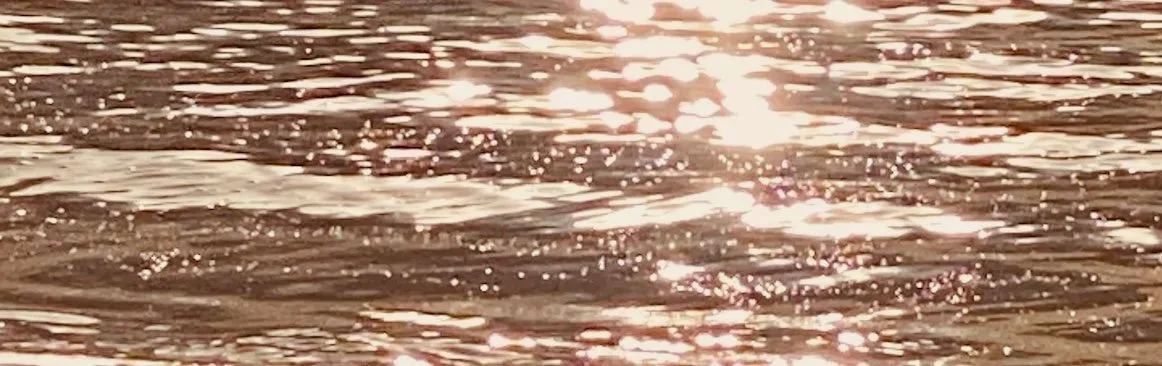
Detail from Magic Diamonds
I’ve been thinking about time as an active collaborator in my creative process — a presence that shapes perception, attention, and relationship, and is shaped by them in return.
This has been sitting alongside Reflections, my current exhibition, in which time and attention both participate — often on their own terms rather than mine.
I haven’t yet made it back to see the works in person at the Tin Pot. I’ve loved hearing the feedback, and was especially stoked to learn that some people have been making their own reflective cards in response to the invitation and materials I left in the space. I’m still curious about how my own viewing experience might change — how it might feel contracted or expanded by what I’ve noticed in between. And I wonder if this happens for those who visit.
Working across different art forms makes changes in my experience of time very tangible.
Photography and painting are both deeply attentive practices, yet they hold very different relationships to time.
Photography, for me, works with the ephemeral. A particular quality of light, a movement of water or wind, a brief alignment of shadow and reflection — something that will not be there again in quite the same way. The creative act is quick, but ideally never casual. It requires a readiness to notice, to respond, to recognise a moment as meaningful while it is still unfolding. And then, paradoxically, to slow down — to be still with the moment, intentional and considered about how best to represent it.
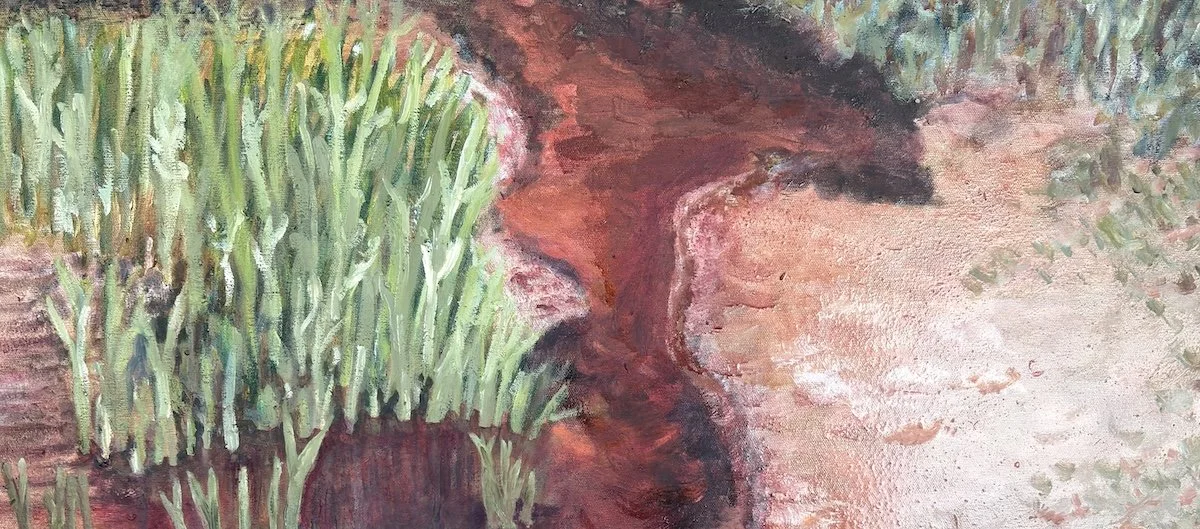
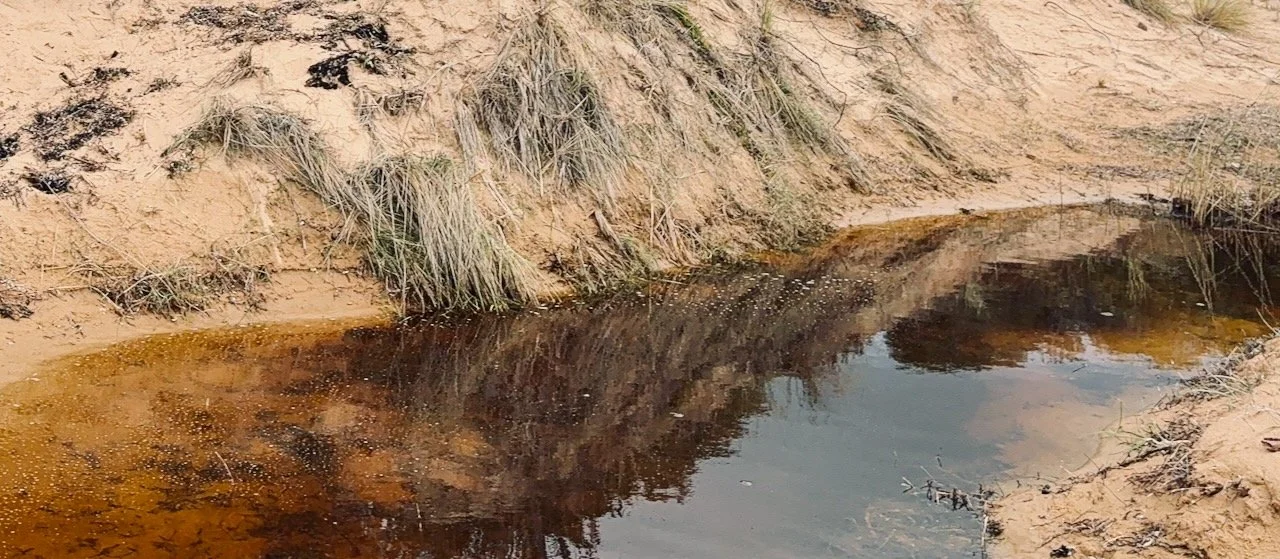
Painting and photography hold very different relationships with time. The painting detail is from Inlet, while the photograph shows the same creek entrance.
The photograph becomes a trace of that encounter. A record of attention in time that has already passed.
Painting, by contrast, asks for duration. It stretches time through extended attention, and contracts it through stillness within the painted image.
Even when the subject is fleeting — light sparkling across moving water, the way a breeze reshapes a garden scene — painting requires that I stay. To remain with change rather than catch it. To sit inside uncertainty as the image shifts before me.
I might begin a painting thinking I am responding to morning light, only to realise, hours later, that what is emerging belongs better to afternoon. The colours deepen. Shadows lengthen. Decisions made earlier no longer fit. The painting changes, and so do I.
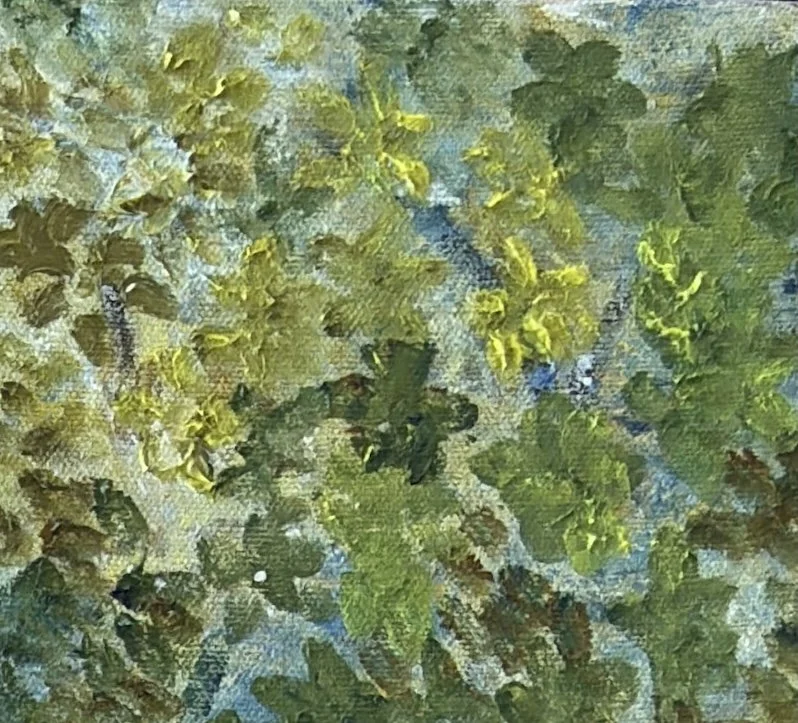
This is not about accuracy. It is about immersion.
Painting stretches time by slowing it down, allowing perception to deepen through presence and repeated looking. It becomes a way of inhabiting the place I am painting rather than extracting a moment from it.
This is especially true when working from plein air, but I experience it even when that presence is mediated through a photograph I have taken myself.
Detail from a painting now in process, playing with shifts in garden light.
While some would disagree, I believe that none of these approaches are more valid than the others.
They simply work differently with time.
What they share is attention.
Attention expands. Where attention rests, something grows.
A photograph enlarges a moment by holding it open. A painting enlarges experience by returning to it again and again, letting time accumulate inside the work.
Perception does not shift all at once. It shifts through presence, through repetition, through staying with what is changing rather than rushing past it. In both cases, perception shifts — not because the subject changes, but because our way of being with it does.
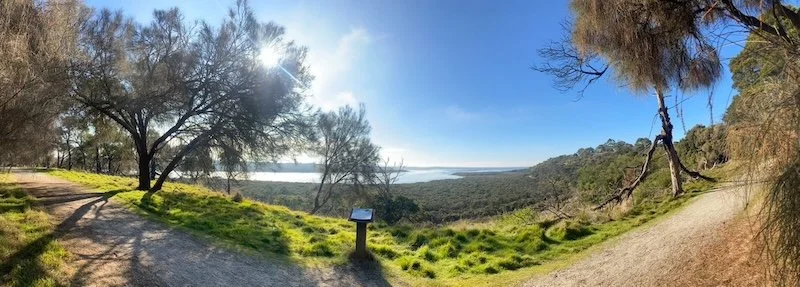
Perception stretches with time — suggested for me in this image of the Rhyll wetlands.
There may be a natural rhythm at work – where attention ebbs and flows like the tides. This feels especially relevant in a culture that treats time as something to manage, optimise, or compress.
Creative practice offers another possibility: time as something to enter into, to be shaped by, rather than controlled. It opens a conversation about how we live inside time, and how art can make that experience more spacious — deepening presence and connection.
Art offers me this quietly and powerfully: not an escape from time, but a different way of inhabiting it.